

Choosing the right Learning Management System (LMS) shapes how well your team learns, stays compliant and applies new skills. This guide compares Moodle with other popular LMS options, explains where each platform shines, and gives practical criteria to match a system to your organization’s priorities. Many teams wrestle with functionality, cost and user experience we’ll break down the trade-offs and give clear, actionable advice so you can choose with confidence.
What is Moodle — and how does it stack up against other LMS platforms?
Moodle is an open-source LMS designed to provide educators, administrators and learners with a secure, configurable platform for tailored learning. Its flexibility and broad feature set make it common in both education and corporate settings. Because Moodle’s architecture supports deep customization, organizations can reshape workflows, branding and integrations in ways many commercial LMS vendors don’t easily allow.
Key features and benefits of Moodle LMS
- Familiar, practical interface: A widely used, functional interface that many teams already know — though some organizations prefer the sleeker look of newer commercial platforms.
- Extensive customization: A rich ecosystem of plugins and configuration options lets you align the platform to your brand and training processes.
- Active community support: A global community contributes plugins, documentation and peer support, keeping the platform current and improving over time.
Together, these strengths help boost engagement and learning outcomes, making Moodle a strong choice when control and flexibility matter.
How Moodle differs from commercial LMS like Canvas and Docebo
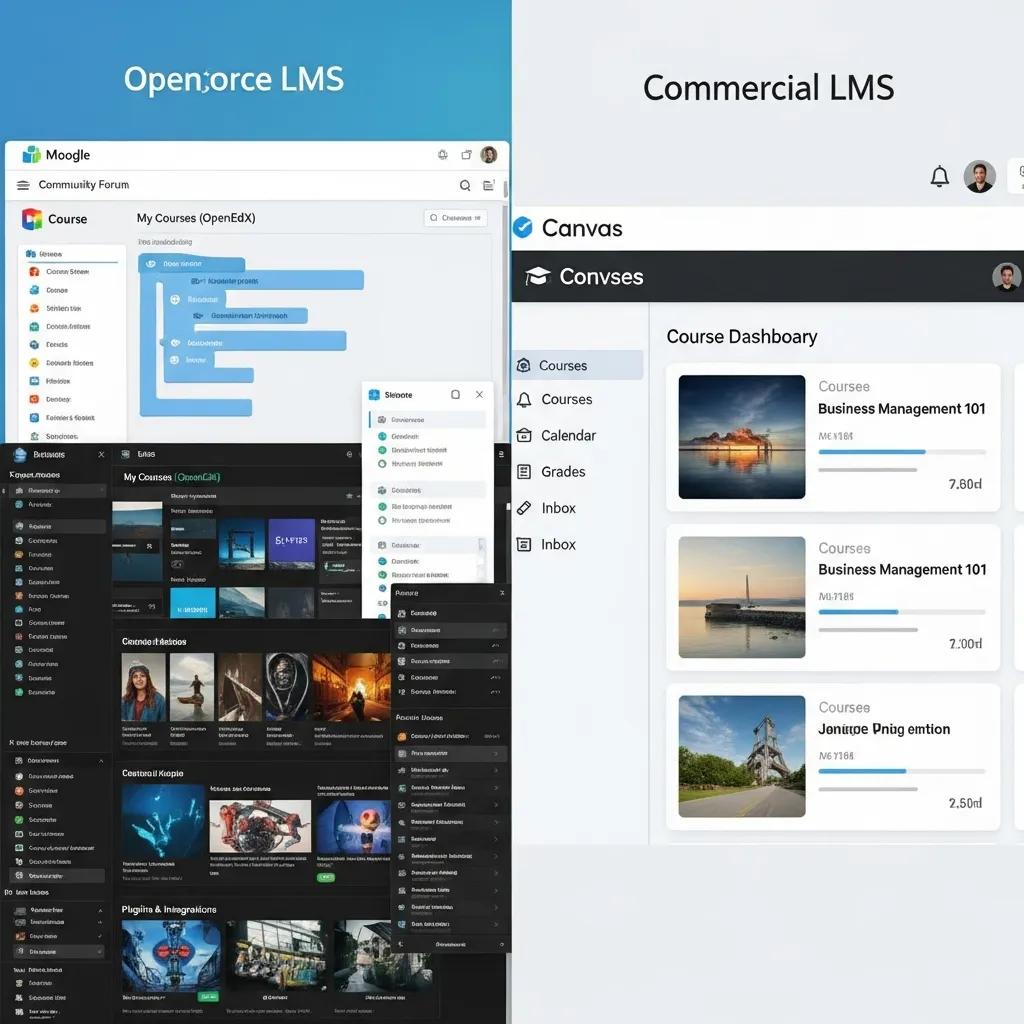
Moodle stands apart from platforms such as Canvas and Docebo because of its open-source model and customization freedom. Commercial LMS vendors often deliver a more polished out‑of‑the‑box experience but typically charge subscription fees. Moodle itself is free to use; the real costs usually come from hosting, custom development and ongoing support.
| Feature | Moodle | Canvas | Docebo |
|---|---|---|---|
| Cost | Affordable | Subscription | Subscription |
| Customization | High | Moderate | Moderate |
| Community Support | Extensive | Moderate | Limited |
This quick comparison highlights how Moodle’s open-source nature supports deeper adaptability a benefit when one‑size‑fits‑all solutions won’t meet your training needs.
Which LMS platforms are the best alternatives to Moodle for corporate training?
Moodle is a solid foundation, but other LMS platforms may better match specific business priorities. Understanding each option’s strengths and trade-offs makes it easier to pick the right fit for your organization.
Strengths and trade-offs of popular LMS alternatives
- Totara: Built on Moodle, Totara adds performance management and compliance features aimed at corporate teams. It’s powerful but can require more technical resources to deploy and maintain.
- Canvas: Praised for a clean interface and strong mobile experience, Canvas is a good fit when ease of use is a top priority. It offers fewer deep customization options than Moodle.
- Docebo: Strong in social learning and analytics, Docebo provides modern features and dashboards its higher licensing fees can be a barrier for smaller teams.
Open-source vs commercial LMS — a practical comparison
Open-source platforms like Moodle and Totara usually mean lower licensing costs and greater customization. Commercial solutions often provide a more refined out‑of‑the‑box UX and vendor support, but at a higher price and with less flexibility.
| Type | Advantages | Disadvantages |
|---|---|---|
| Open-Source | Lower licensing costs, highly customizable | Requires technical resources for setup and maintenance |
| Commercial | Polished user experience, vendor support | Higher cost, less flexibility |
Use this trade‑off model to decide what matters most for your team: control and cost, or speed and simplicity.
How to evaluate and compare LMS platforms for your business needs
Picking the right LMS means measuring features against clear business goals so the platform supports learning outcomes, compliance and future growth.
Top criteria for LMS selection in corporate environments

- Cost: Assess both upfront and ongoing expenses hosting, integrations, custom development and support all add to total cost.
- Customization: Clarify how much you need to adapt workflows, branding and integrations to meet your training goals.
- Support: Look at vendor support, community resources and available implementation partners for a smooth rollout.
These criteria help you focus on impact rather than a long feature checklist.
How cost, customization and support shape your LMS choice
The balance between cost, customization and support determines your total cost of ownership and time to value. A low‑cost option might lack necessary features or reliable support, while a premium solution may save time but restrict future flexibility. Match the platform to your team’s technical capacity and long‑term objectives.
Industry-specific considerations when choosing between Moodle and other LMS
Different industries have distinct training, compliance and reporting needs — and those requirements should steer your LMS decision.
How Moodle supports healthcare, government and education
Moodle performs well where ongoing training and strict compliance matter. Healthcare teams use it for regulatory training and credential tracking, government agencies rely on it for standardized training paths, and educational institutions use it for course management and student engagement.
Essential LMS features for regulated industries
For regulated environments, prioritize these capabilities:
- Compliance tracking: Confirms required training is completed and up to date.
- Reporting: Produces audit‑ready reports on learner progress and certifications.
- Access controls: Restricts sensitive content to authorized users.
These features help organizations meet regulatory requirements and demonstrate compliance during audits.
How can Markanyx Solutions help you choose and implement the right LMS?
Markanyx Solutions offers end‑to‑end LMS services with deep experience in Moodle and Totara. We help you evaluate options, implement the platform, and design learning so your LMS becomes a practical, measurable tool for development.
- Implementation guidance: Expert setup and configuration to align the system with your workflows.
- Course design: Instructional design that boosts learner engagement and retention.
- Secure hosting: Reliable, scalable hosting so your LMS performs when your users need it.
We combine technical delivery with learning design to help you get the most from your LMS investment.
How Markanyx supports customization, hosting and ongoing maintenance
Markanyx provides ongoing services, including:
- Customization: Tailoring the LMS to your branding, roles and business processes.
- Hosting: Secure, scalable environments that grow with your user base.
- Maintenance: Regular updates, security patches and troubleshooting to keep the system reliable.
With this support in place, your team can focus on training while we manage platform reliability and improvements.
Next steps to selecting and deploying your ideal LMS
Choosing and deploying the right LMS is a strategic move toward better learning outcomes and operational efficiency.
Using a decision-making framework and checklist for LMS selection
- Define objectives: Be explicit about outcomes, compliance needs and success metrics.
- Research options: Compare platforms against your objectives, user needs and technical constraints.
- Evaluate fit: Pilot shortlisted platforms, gather user feedback, and weigh cost against long‑term value.
A structured process ensures you choose an LMS that meets both current needs and future growth.
How to book a demo or consultation with Markanyx for personalized guidance
For hands‑on help, book a demo or consultation with our team. We’ll review your goals, recommend options, and outline a practical implementation plan tailored to your organization.
Use that conversation to validate assumptions and set a clear path to deployment.
Frequently Asked Questions
What are the main advantages of using an open-source LMS like Moodle?
Open-source LMS like Moodle reduce licensing costs and enable deep customization, so you can shape workflows, branding and integrations to your needs. A large developer community contributes plugins, documentation and peer support, which helps the platform stay flexible and current.
How can organizations ensure successful implementation of an LMS?
Start with clear objectives and involve stakeholders from the outset. Create a realistic rollout plan covering technical setup, content migration, admin and user training, plus pilot testing. Collect feedback during rollout and iterate — strong change management and ongoing support are essential for adoption.
What role does user experience play in LMS selection?
User experience drives engagement. An intuitive interface, solid mobile support and accessibility features reduce friction and improve completion rates. Include representative users in testing to confirm the platform fits how learners actually work.
How do organizations measure the effectiveness of their LMS?
Measure quantitative indicators like course completion, assessment scores and time‑on‑task alongside qualitative feedback from surveys and interviews. Use built‑in analytics to identify trends and make data‑driven improvements to content and delivery.
What are common challenges when using an LMS?
Common issues include technical integration problems, user resistance and insufficient training. Reduce risk by planning integrations early, investing in targeted training, providing ongoing help resources, and promoting a culture that values continuous learning.
How can organizations ensure compliance with industry regulations using an LMS?
Choose an LMS with compliance tracking, robust reporting and role‑based access controls. Schedule regular audits of training records, keep content aligned with regulatory changes, and partner with compliance specialists to map training to legal requirements.
Conclusion
Choosing the right LMS matters it affects training effectiveness, compliance and how quickly your people apply new skills. Understanding Moodle and its alternatives helps you prioritize what’s most important: flexibility, cost, user experience or vendor support. If you’d like help mapping options to your goals, Markanyx Solutions can guide you from selection to launch. Start the conversation and transform your training programs today.