
Compliance training is a regulatory necessity and a core element of operational safety in airport environments. This article explains how Totara LMS supports compliance programs by enabling consistent course delivery, evidence collection, and audit reporting. It outlines Totara’s principal capabilities, recommended practices for constructing a training evidence trail, and methods for documenting and tracking compliance activities. The guide also summarises Markanyx’s role in configuring Totara to meet airport security requirements.
Research indicates that, despite the value of training, translating that training into consistent rule-compliant behaviour among airport security staff presents practical and organizational challenges.
Airport Security Training & Rule Compliance Behavior
Training is widely regarded as influential on worker compliance and overall security performance. However, the social and organisational complexity of airports means that some staff groups—such as screeners, security guards and ground personnel—may still deviate from procedures, which raises questions about training effectiveness.
Does training improve security decisions?
A case study of airports, C Rapaport, 2017
Totara LMS supports compliance training through features that simplify course development, learner management, and reporting. The system tracks progress, automates certification lifecycles, and produces detailed reports for monitoring training outcomes. Its configurable nature allows organizations to align programs with specific regulatory criteria and to ensure personnel hold required certifications.
For organizations looking to enhance their compliance training, Markanyx offers tailored solutions that integrate seamlessly with Totara LMS. By leveraging Markanyx’s expertise, organizations can optimize their training processes and ensure adherence to regulatory standards.

Totara LMS includes specific functions that support compliance management and audit readiness.
Together, these capabilities enable organizations to manage training obligations systematically and to demonstrate compliance to regulators.
Totara provides robust reporting and analytics that capture learner progress, completion metrics, and assessment outcomes. These granular records support accurate training histories required for regulatory audits. Integrations with HR and personnel systems further consolidate training data for a single view of employee compliance status.
Effective training evidence trails rely on consistent processes and maintained records.
Adopting these practices produces a reliable audit trail and improves the integrity of compliance records.

Effective documentation and tracking depend on automation, accurate records, and periodic verification.
These methods reduce administrative risk and improve the reliability of training evidence.
Beyond training-specific records, a structured documentation system for economic, operational, and safety matters strengthens institutional resilience and risk management.
Airport Economic Security Documentation System for Risk Resilience
Airports are complex systems where financial, operational and safety risks intersect; yet document practices that convert incidents into organisational learning are often fragmented. A coherent documentation system specifies essential document types, their interactions across strategic, tactical and operational levels, and how disclosed artifacts relate to financial stability and fraud prevention.
Economic Security Documentation System in Civil Aviation Enterprises: The Case of Airports, Z Zhyvko, 2025
Audit reporting methods should improve traceability and reduce manual error.
Applied together, these methods create a structured, auditable record that supports regulatory compliance.
A unified LMS auditing framework can consolidate risk assessment, user-role reviews, and policy checks to simplify oversight and broaden audit scope.
Streamlined LMS Auditing Framework for Security & Compliance
The proposed framework covers performance, security, user roles, support and feedback. By integrating risk analysis, user experience and policy evaluation, it reduces fragmentation and provides a structured method to identify vulnerabilities and establish controls.
Implementation and Evaluation of A Proposed Framework for Auditing Learning Management Systems in An Egyptian University, SA Mazen, 2025
Totara’s audit reporting supplies analytics that support governance and operational decisions. Automated certification workflows keep personnel credentials current, while integration features ensure consistent records across systems. This combination simplifies audits and strengthens the training governance framework within airport operations.
Totara includes reporting capabilities designed to produce evidence suitable for audits.
These reporting tools support audit readiness and ongoing compliance monitoring.
Customizing Totara reports requires defining metrics, designing report templates, and aligning output with regulatory requirements.
Following these steps produces reports that are aligned with operational needs and regulatory expectations.
Regulatory obligations typically cover access control, identity verification, and emergency readiness.
Compliance with these requirements is fundamental to maintaining secure airport operations.
Training evidence provides verifiable records that demonstrate fulfilment of training obligations and readiness for inspection.
Maintaining structured, accessible evidence expedites audits and demonstrates a commitment to regulatory standards.
Implementation and monitoring require selecting compatible tools, evaluating results, and ensuring system integration.
Applying these steps ensures a reliable tracking environment that supports accurate reporting and audit readiness.
Deploying Totara involves assessment, configuration, and user enablement.
Executing these steps increases the likelihood of a successful deployment and sustained compliance outcomes.
Measure effectiveness with defined metrics, participant feedback, and regular assessments.
Combining quantitative KPIs with qualitative feedback provides a reliable basis for audit and continuous improvement.
Markanyx delivers customized Totara implementations that improve tracking, learning pathways, and operational support for compliance programmes.
These capabilities position Markanyx as a practical partner for organizations seeking to strengthen airport security training.
Markanyx provides sector-specific configuration, data-protection aligned customisations, and sustained operational support for Totara deployments.
This expertise enables organizations to deploy compliant, secure and maintainable LMS solutions.
Markanyx implementations have delivered measurable improvements in engagement, compliance tracking and client satisfaction.
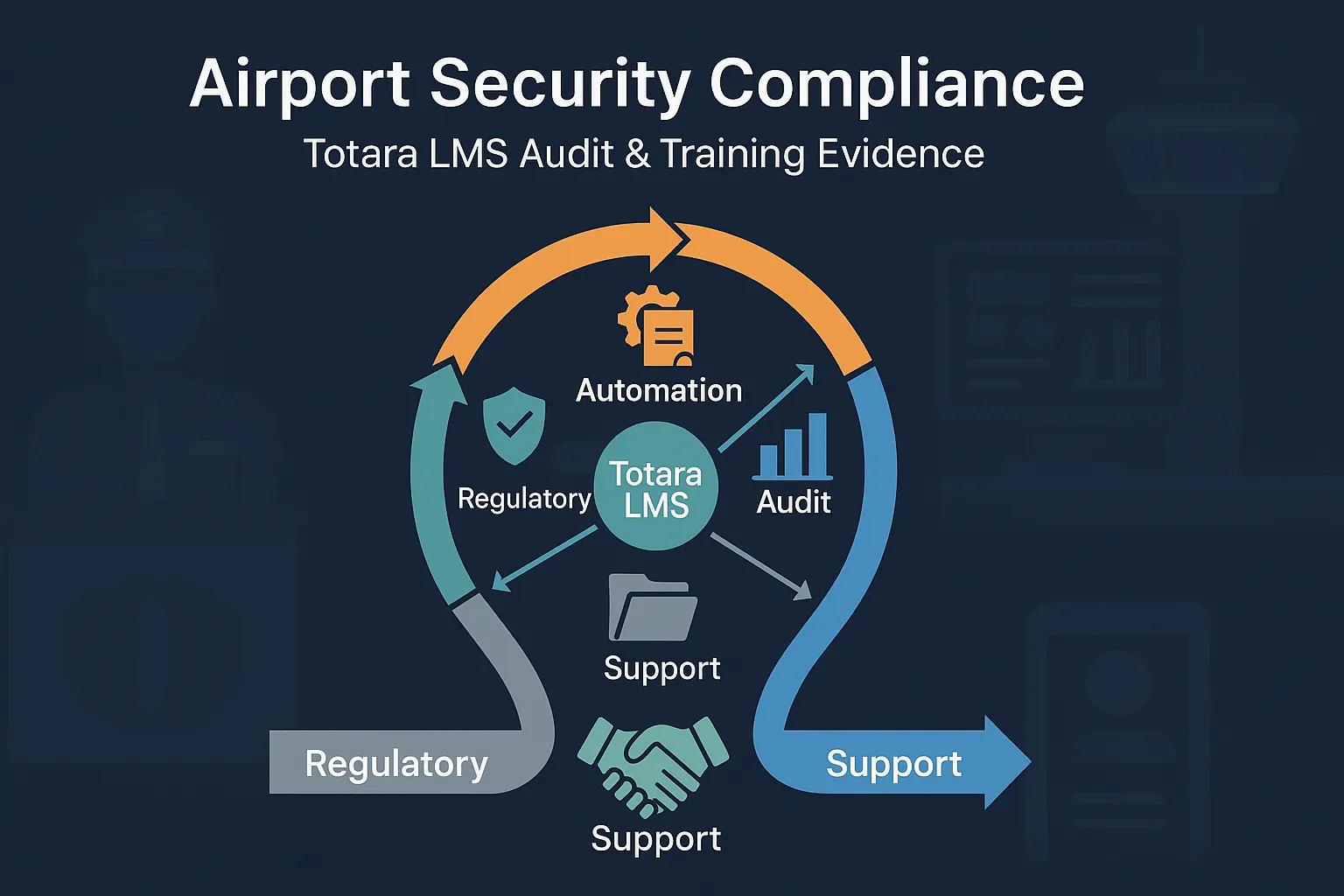
These results reflect the practical impact of tailored Totara solutions on airport security training programmes.
To further enhance your airport security training, consider the benefits of a robust Totara LMS . With its comprehensive features and customizable options, it can significantly improve your training outcomes.
Totara streamlines course administration, automates certification lifecycles, and supports bespoke reporting. These capabilities help organisations maintain regulatory compliance while providing clear visibility into training gaps and completions. Integration with existing systems further consolidates data for operational oversight.
Organisations should schedule periodic reviews, conduct regulatory audits of content, and incorporate frontline feedback. Totara’s configurability allows rapid updates to courses and assessments to reflect regulatory changes.
Employee feedback identifies practical issues in content relevance and delivery. Collecting structured feedback enables targeted revisions that improve applicability, engagement and adherence to procedures.
Use KPIs, completion and assessment data, and engagement metrics to evaluate performance. Totara’s reporting tools generate analytics on learner progress and outcomes to inform continuous improvement.
Common challenges include keeping materials current, ensuring consistent participation across roles, and accurately tracking completions. Automated systems and standardized processes reduce these risks and support consistent implementation.
Totara provides audit-ready reports, automated record-keeping, and configurable report templates. These features reduce administrative effort and support transparent, verifiable audit processes.
Implementing a structured training evidence trail with Totara LMS improves documentation, reduces administrative risk, and supports regulatory compliance. The platform’s automation and reporting features simplify certification management and audit preparation. By engaging Markanyx for tailored implementation and support, organisations can optimise their training systems and strengthen security outcomes.